
Last Light on the Track
Short Story

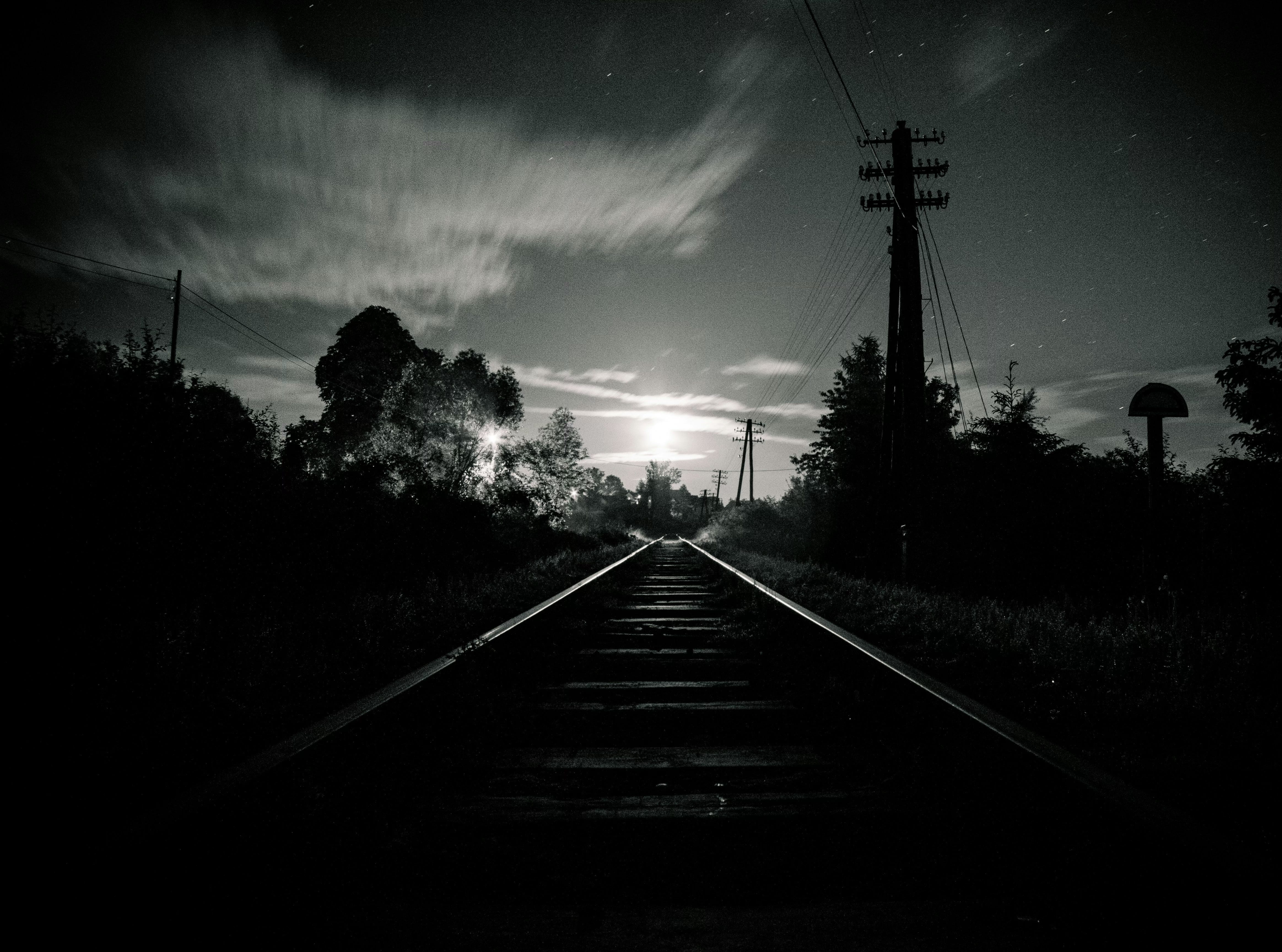
Johnny starts before the birds. It’s still dark when he pulls up by the access gate, the sky just beginning to lift at the edges. No colour yet. Just a loosening. He signs the log in the cab of the van, clips the torch to his jacket, and walks down the ballast toward the first signal.
Four twenty-three. Same time every Tuesday and Friday. Has been for three years now, since they cut the crews and stretched the routes. Before that it was Mondays, Wednesdays, Saturdays. Different sections then. He preferred those shifts. Shorter walks. Better light by the time he finished.
The rails hold the cold. You can feel it through the soles of your boots. He’s learned to walk lightly, not out of care but habit. Thirty years of it. His body knows where to place itself without asking. Where the ballast is firmest. Which sleepers to avoid. The rhythm of it, almost the same as breathing.
The signal lamp is still on. A dull amber glow against the grey. He checks the casing, wipes the glass with his sleeve. Leaves a faint smear. He rubs it clean again. All good. He pulls out his phone, logs it in the app. Signal 1, clear, 04:31. The app makes a satisfied sound. He moves on.
Further along, the track bends slightly, following the line of the cutting. Gorse on one side, hawthorn on the other. Beyond that, fields falling away into mist. Somewhere out there, Chesterfield. The crooked spire just visible on clear mornings, but not today. Today the mist sits low and thick.
He likes this time. The quiet before the first train. Before the timetable asserts itself. Before the 05:47 to Sheffield, before the 06:12 to Derby. Before the line becomes what it’s meant to be: a conveyor, relentless, necessary.
At the second signal, he notices the bag.
It’s tucked just beyond the fence, half-hidden by brambles. A supermarket carrier. Blue lettering. Tesco. One handle torn. It looks as though it’s been placed there, not dropped. Deliberately set down. Not thrown.
He doesn’t touch it straight away.
He stands for a moment, listening.
Nothing unusual. No movement. Just the low hum of the lines waking up somewhere beyond the horizon. The electrical charge building. He can feel it sometimes, in his teeth.
He crouches and peers inside.
A flask. Empty now, lid screwed back on. A packet of biscuits, opened, two missing. Chocolate digestives. A pair of gloves, fingerless, cheap wool. Dark blue. And a folded hi-vis vest, damp with dew. Council issue, by the look of it. The old style, before they changed suppliers.
He straightens slowly.
There’s a flattened patch of grass nearby, pressed down in the shape of a body. Someone has sat there, or lain back, watching the sky change. The grass is still compressed. Recent, then. Last night, probably. He can picture it easily. The angle. The view down the track toward the signal. The sense of being out of the way but not entirely hidden. Witnessing something.
He’s seen worse. Shoes lined up neatly. Notes weighted with stones. Things you don’t forget even when you want to. Things that make you call it in immediately, stand back, wait for others.
This isn’t that.
Still, he notes it. Mentally. As he’s been trained to do. Evidence of presence. No immediate concern. He scans the cutting, the bridge beyond, the fence line. No one visible. No sounds of distress.
He checks the signal. The lamp is fine. The casing secure. He logs it. Signal 2, clear, 04:39.
The third signal flickers, then steadies. Johnny adjusts the housing, tightens a loose screw. The torch beam catches on something caught in the fence: a length of string, frayed at the end. It could be anything. Washing line. Kite string. Something agricultural. He leaves it.
By the time he reaches the far end of his section, the sky has shifted properly now. A pale wash of pink behind the cloud, the mist thinning in places. The birds have started up. He hears a lark, high and thin. Then a blackbird somewhere in the hawthorn.
Signal 4 is out.
He radios it in. Gets static, then a voice. Dave, in the control room at Sheffield.
‘What’ve you got?’
‘Signal four. Lamp’s dead.’
‘Can you fix it?’
‘Need a replacement. Bulb’s gone.’
‘I’ll log it. Can you tape it?’
‘Already am.’
He pulls the hazard tape from his bag and winds it around the post. Bright yellow. DO NOT APPROACH. He takes a photo for the log. The app makes its sound again.
On the walk back, he notices footprints in the ballast. Not his. Trainer soles. Size eight, maybe nine. Light tread. Heading away from the track, toward the lane that runs parallel. Whoever it was didn’t linger. Didn’t wander. Knew where they were going.
Good, he thinks. If he thinks anything at all.
But he does think something. He thinks: whoever you are, I hope you got home.
He’s been doing this long enough to know the difference between someone passing through and someone not passing through. Between rest and something else. This was rest. Someone who needed to be out of the world for a few hours. Who chose the track because it was empty, because it had light, because trains meant something. Order. Continuity. The promise that morning comes.
He’s felt it himself. Not lately. But years ago, when things were harder. When his daughter was small and sick and the hospitals were weekly and the money was always short. He’d come out here on his days off. Sit by the tracks. Watch them run. The punctuality of it. The inevitability. It helped.
Back at the van, he fills out the log. Ticks the boxes. Under Observations, he pauses, pen hovering.
He could write: Evidence of overnight presence. Person unknown. No signs of distress. Area clear.
But that would mean a report. Questions. Possibly police. Possibly cameras checked. Possibly someone losing a job, if the hi-vis vest means what he thinks it means.
He writes: Litter by Signal 2 — removed.
He folds the bag and places it in the van’s bin. The flask too. The biscuits. Keeps the gloves separate. Puts them on the dashboard to dry. If they’re still there at the end of the week, he’ll take them to the charity shop in Chesterfield. Someone will use them.
The vest he folds carefully and puts in the back. He’ll wash it at home. Add it to his spares. You never know when you need an extra.
The first train passes a few minutes later. The 05:51 from Chesterfield to Sheffield. The rush of it. The brief violence of sound. The carriages blurring past. Lights on inside already. Commuters. Early shifts.
Then it’s gone, leaving the track humming softly, like a held note.
Johnny locks up, starts the engine.
As he pulls away, he catches the last signal in the mirror. Still glowing. Still doing its job. He thinks of the person who sat there through the night, watching it cycle, believing in its steadiness. Amber to green to red to amber. Over and over. A rhythm you could trust.
The line will carry people all day. To work. To hospitals. To places they don’t yet know they’re leaving for the last time. It will hold them briefly, then let them go. Some will notice the signals. Most won’t. They’ll read their phones or sleep or stare out the window at the fields they don’t know the names of.
But the signals will keep working. And someone will keep checking them. Making sure.
By evening, no one will know someone was ever there. The grass will spring back. The footprints will fade. The next rain will wash away the evidence.
But the light will come on again.
It always does.
Johnny drives back through Chesterfield, past the leaning, twisted spire, past the market that’s just setting up. He stops at the Morrison’s for a coffee and a bacon sandwich. Sits in the car park and eats it slowly. His phone pings. Dave, confirming the bulb replacement is scheduled for this afternoon.
He texts back: Cheers.
At home, his wife is up, making breakfast. Their daughter is at university now. Manchester. Doing well. Calls every Sunday.
‘Alright?’ his wife says.
‘Yes.’
‘Quiet one?’
‘Usual.’
He hangs his jacket by the door. The gloves are still on the dashboard. He’ll get them later.
He sits at the table. His wife puts a plate in front of him. Toast. More bacon. She knows he’s already eaten but she makes it anyway.
‘One of the signals is out,’ he says.
‘They’ll fix it?’
‘This afternoon.’
She nods. Sits down with her tea.
‘You look tired,’ she says.
‘I’m alright.’
And he is. Mostly.
He finishes his breakfast. Goes upstairs. Sleeps for three hours.
When he wakes, he checks his phone. A message from Dave. Signal 4 bulb replaced. All clear.
Johnny texts back: Good.
On Friday he’ll walk the section again. Check the signals. Look for anything that needs attention. He won’t look for the bag. It’s gone. The person is gone. That’s how it should be.
But he’ll notice, walking past Signal 2, if there’s anything new. A different bag. Different gloves. Different evidence.
And if there is, he’ll do the same thing.
He’ll note it. He’ll log what he needs to log. He’ll remove what needs removing.
He’ll keep the line safe. Keep the signals working.
That’s the job.
That’s what he does.
I truly adore your evocative imagery. The steadiness of routine, the daily assuredness of repetition.